
Snowboarding
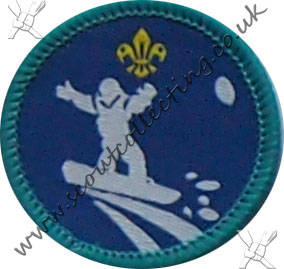
Snowboarding Explorer Badge Post 2002
Activity badges are worn on the left
arm and in the order in which they are earned.
To gain this activity badge, Explorer Scouts must fulfil the
requirements below:
1. Demonstrate
the following:
a. three good
warm up exercises, one each for upper, middle and lower body
b. good
stance and balance (board with arms folded etc)
c.
a straight run with a hockey stop
d. linked
rhythmic, carved turns of varying sizes
e.
basic turns with the wrong foot forward (boarding backwards)
f.
complete a slalom run through 12 open gates
g.
ability to board on rough or bumpy terrain
h. a basic
jump or trick on the flat
i.
how to use a resort piste map
j.
complete a free run down a moderate to hard slope (red) showing
balance, control, good choice of line and awareness of other people on the
slope
k. try another snow sport of your choice.
2. Demonstrate
how to:
a. carry your
equipment safely
b. put on and
take off a board correctly
c.
turn 360° on a flat surface with one and two feet attached
d. climbing
up the slope, board on toe edge
e.
fall and get up safely
f.
Skate on the flat
g.
get on and off a chair lift correctly
h. use a
beginners' drag lift (button or T-bar)
i.
traverse across a slope from left to right and vice versa,
showing good body position, stance and use of board edges
j.
perform falling leaf down a slope, toe and heel edges
k. six linked
turns, showing control of the turn and speed
l.
turn into a traverse, showing good body position, stance and use
of board edges
m. 'no falls' descent of an easy (green) slope, showing balance, control and stopping.
3. Explain to
an appropriate adult:
a. the
different types of board and boot design
b. what snow
blindness is and how it is avoided
c.
the importance of using sunscreen
d. the
physical dangers you are likely to encounter while boarding and how the ski
patrol would mark these
e. the Fédération Internationale de Ski safety rules.
4. Discuss:
a. the
effects of extremes of temperature (frost, nip/frost bite, hypothermia,
sunstroke, heat exhaustion and dehydration). How to avoid them and how they
should be treated
b. the
structure of the national governing body for snow sport in your country
c.
the impact of snow sports on the mountain environment
d. your further involvement in your chosen snow sport.
 More badges...
 Top of page

