
Astronautics
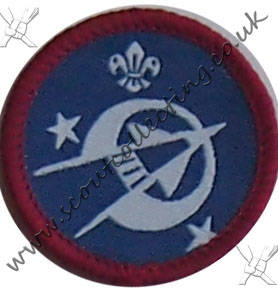
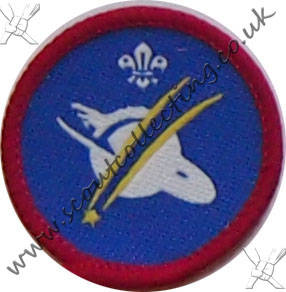
Astronautics Scout Badge post 2002
The Scout Activity
badges from post 2002 are circular with the Activity image on a blue background
with a red border. The Badge is worn on the left sleeve starting from the
shoulder and going down in order of achievement.
To earn the Astronautics
Scout badge they must achieve the following
1. Explain
the purpose of space exploration including:
·
historical reasons
·
immediate goals in terms of specific knowledge
·
benefits related to Earth resources, technology, and new
products
2. Chose one
topic below and with it undertake option one or two:
a.
a commercial or scientific rocket (Ariane, Delta, Soyuz, Proton,
Zenit, etc)
b.
the NASA Space Shuttle
c.
the International Space Station
d.
a specific satellite (eg Envisat, Cassini, Aurora, etc)
e.
an unmanned space probe
Option one
Describe
the topic's primary mission purpose; explain the functions of the component
parts, together with a brief history and accomplishments of a specific mission
and what was learned from that mission.
Option two
Build a
scale model of or about the topic, either from a commercial kit, or from plans
available from the Internet or model clubs and shops.
3. Discuss
and demonstrate two of the following:
.
the law of action-reaction in the context of rockets and zero or
low-gravity environments
a.
how rocket engines work, and their lift-off and re-entry
procedures
b.
how satellites stay in orbit and the different types of orbits
they use
c.
how satellite pictures of the Earth, planets and their moons are
made and transmitted
4. Complete
all of the activities in one of the following alternatives:
Alternative A - Rocketry
1. Explain
the safety code for rocketry and be able to identify the principal parts of a
rocket.
2. Describe
how solid and liquid propellant rocket motors work.
3. Build,
launch, and recover a single or double-staged model rocket.
4. Make a
second launch to accomplish a specific objective. For example, carrying a
fragile payload, aerial photography, altitude measurement, temperature
measurement, parachute recovery, remote control, building a launch controller
or launch pad.
Notes
This
activity must follow the appropriate BMFA/ UKRA safety codes on Rocketry.
Alternative B - Space exploration
1. Describe
how space satellites and probes have added to our knowledge of the Solar
System.
2. Build an
accurate scale model of a space exploration vehicle. Find out about its design,
function, and basic operation. Be able to help others learn about your vehicle.
3. Design an
inhabited base space colony. What conditions will you need to overcome to ensure
suitable living arrangements, energy sources, special equipment, health and
safety needs, and environmental protection or danger? Share and explain your
design or model with others.
4. Using
photographs, news clippings, articles from the internet etc, mount a display
about a current space mission and share your findings with others.
Alternative C - Space port
1. With a
group of Scouts, plan and participate in a themed 'Space Camp' or event,
undertaking appropriate activities.
2. Assist in
organising a visit to a space centre, museum, planetarium or rocketry
enthusiasts group and share your experiences with an adult or other Scouts.
3. Find out about careers in the space industry.
 More badges...
 Top of page

